Ways to use ube — and where it comes from.
Real ube is only as good as what you make with it. Here are a few starting points — and why the real, farm-grown yam beats a synthetic stand-in.
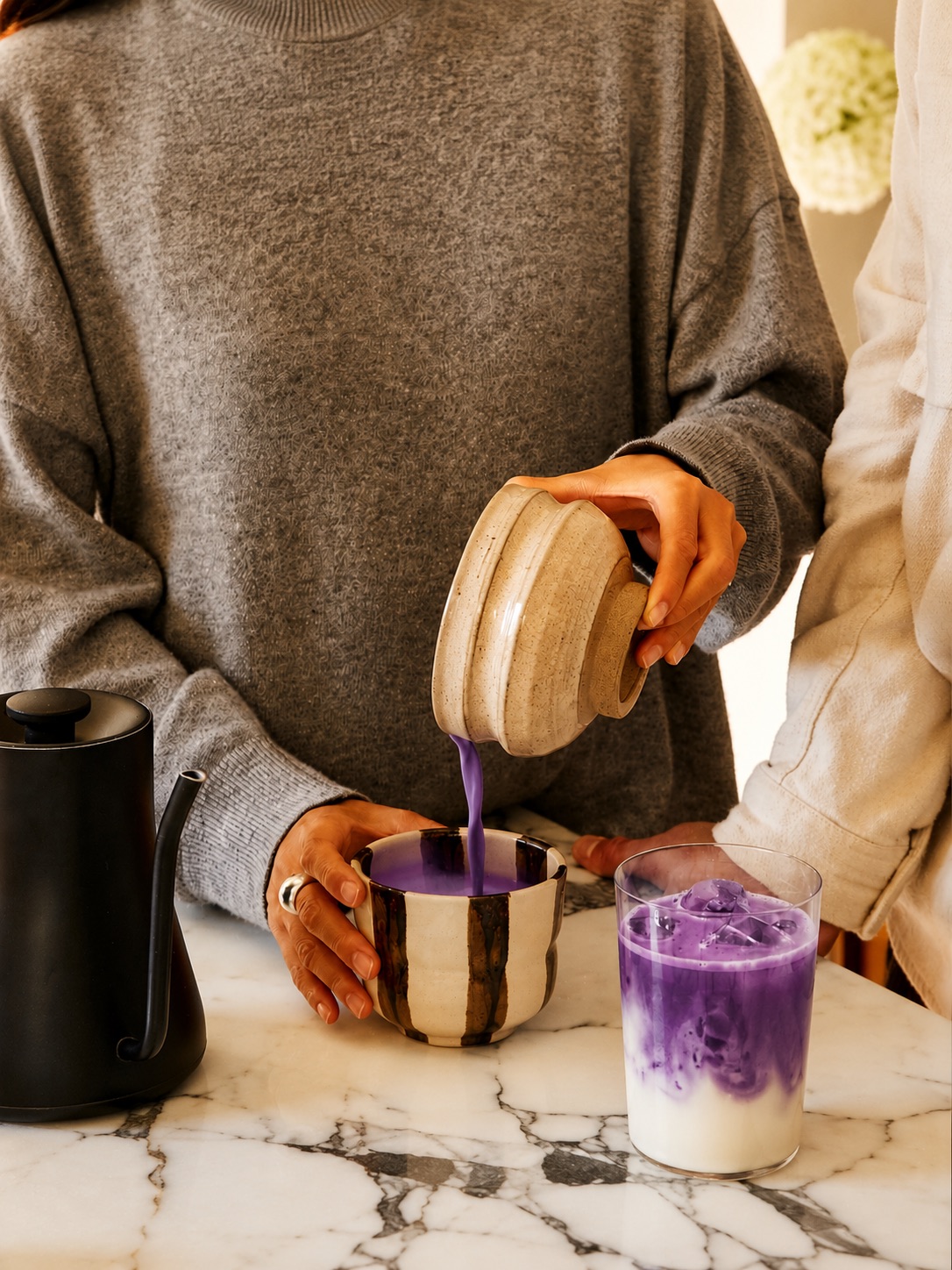
From the counter to the kitchen.
Earthy, gently sweet, almost vanilla-like — Ube Kinampay tastes the way its colour looks. It folds into milk, doughs and bases for an earthy-sweet note and a vivid violet that’s the yam’s own, not a dye.
-
Iced & hot lattes
Whisk into milk for a vivid violet latte, hot or over ice.
-
Soft-serve & ice cream
Folds into bases for colour and an earthy-sweet note.
-
Pastry cream & fillings
Colours crème pâtissière, buttercream and tart fillings.
-
Breads & pandesal
Tints enriched doughs — ube pandesal, brioche, milk bread.
-
Halaya
The classic slow-cooked ube jam, the heart of many desserts.
-
Cakes & cookies
Sponge, basque cheesecake, cookies and financiers.
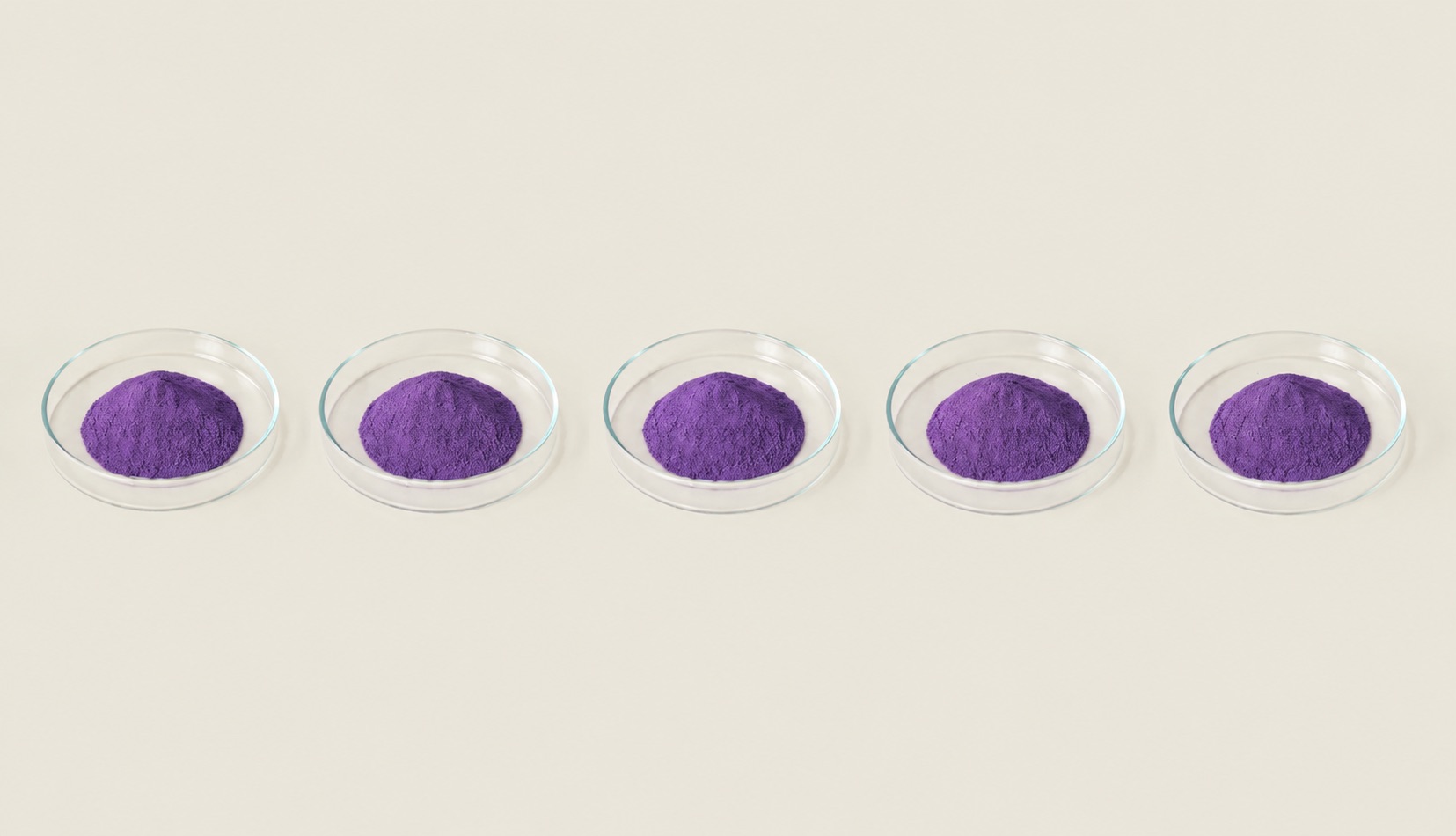
Real ube, not an imitation.
A lot of what’s sold as “ube” never saw a yam. It’s purple sweet potato — a different plant — or ube flavouring topped up with purple colouring. The vivid shade is usually a dye.
Ours is the actual yam: Ube Kinampay, a heritage Filipino purple yam (Dioscorea alata), grown in the Philippines and milled to a pure powder with no fillers, flavourings or colourings. The violet is the yam’s own pigment, which is why it drifts bluer in alkaline mixes and pinker in acidic ones. A dye can’t do that.
One heritage variety, nothing added, with a certificate of analysis behind every lot.
Start with the powder.
The same Ube Kinampay, in sizes for home or service.